
Walnut Creek, CA
Walnut Creek Life Insurance That Begins With the Policy You Have
Clients in Walnut Creek, Concord and Lafayette come to us for term, whole and universal life, mortgage protection, final expense coverage and retirement income planning. If you hold a policy now, we read it first and tell you whether adjusting it is better than restarting at an older age with a new premium.
- Your current policy reviewed first
- Side-by-side comparisons on paper
- Clear keep-or-switch advice
- Each quote walked through

An Agency That Starts With Your Paperwork
Life Insurance Walnut Creek works with clients across Contra Costa County who want a clear read on their coverage before they spend more on it. A lot of people carry a policy they bought years ago, a group plan through work that ends when the job does, and no idea whether the two together still cover a mortgage and a family's living costs.
We think a policy that still does its job should be kept, and we say so even when a new sale would pay us more. When an old policy really is the wrong fit, because the term is about to run out, the premiums on a universal life contract are climbing, or the benefit no longer matches your debts, we explain why and show you the alternative in writing.
Coverage We Write and Review
We place term life insurance for income replacement, mortgage protection insurance sized to your loan balance, and whole life and universal life insurance for permanent coverage with cash value. For clients closer to the end of their working years, we handle retirement income planning and final expense insurance. Each service page explains how that policy type is built, what it costs to carry and where it tends to go wrong.

Term Life Insurance
Level-premium term coverage matched to your mortgage, income and children's ages, with a look at any policy you already own before anything new is suggested.

Mortgage Protection
Life coverage matched to your loan balance and remaining term, so your family can pay off or keep the mortgage on their own schedule.
Whole Life Insurance
Permanent coverage with fixed premiums and cash value, and a straight answer on whether your current policy should be kept, adjusted or replaced.

Universal Life Insurance
Flexible permanent coverage with a visible cash value account, plus in-force reviews that adjust an older policy before anyone suggests buying a new one.

Retirement Income Planning
We look at the cash value, loans and riders in the policies you own, then map how they can feed steady income once paychecks stop.

Final Expense Insurance
Small whole life policies sized for funeral costs and final bills, with a review of the coverage you already own before we suggest anything new.
What Working With Us Looks Like
By the end of the first call, most clients know whether they need any new coverage.
- 1
Start by phone
We find out who relies on your income, what you owe, and what coverage you hold on your own or through your job. Keep any current policy within reach if possible.
- 2
Look at your current coverage
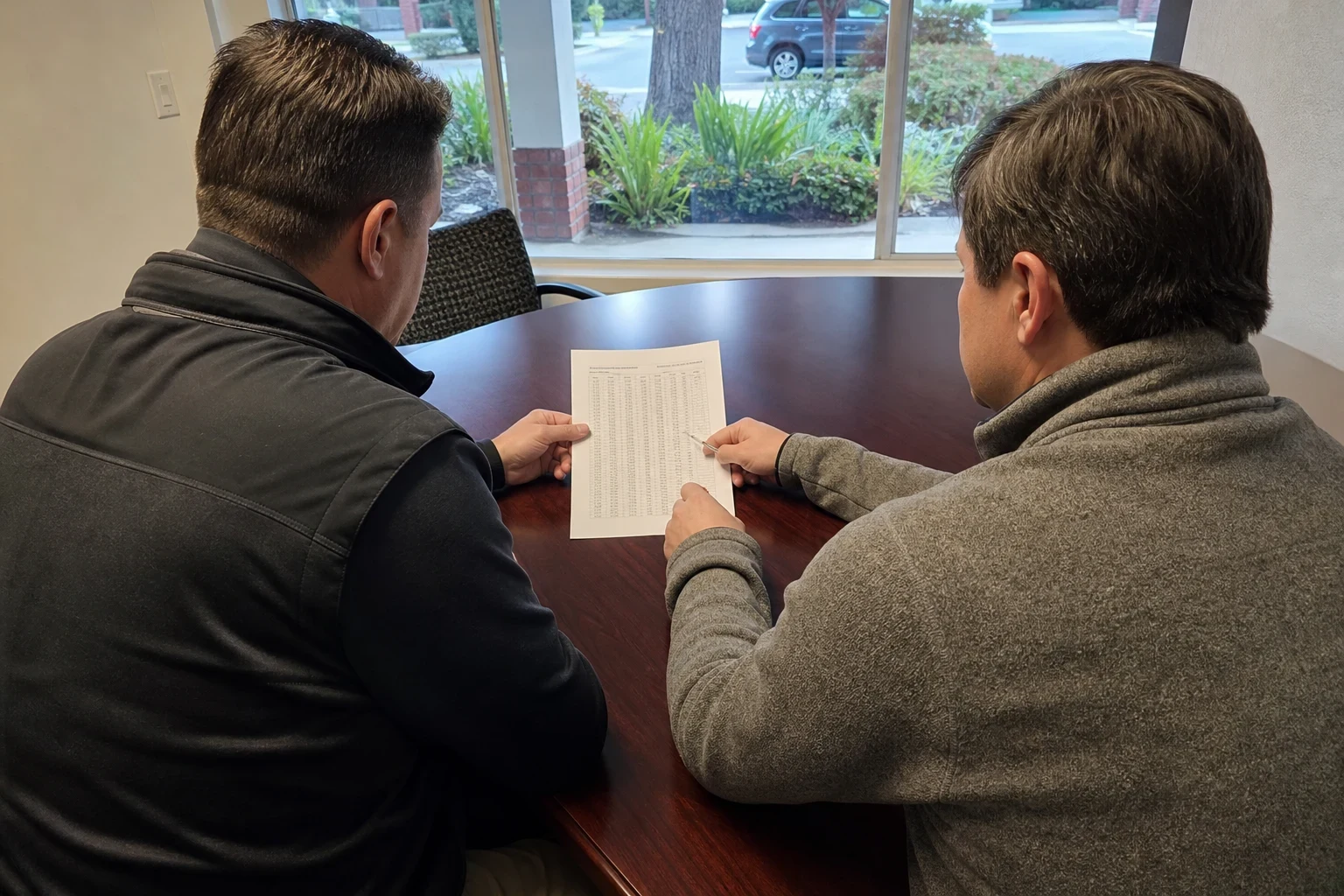
We check your policy for its beneficiaries, riders, conversion deadline and the date the term ends. Then we tell you straight whether to adjust it, add to it or replace it.
- 3
Quotes side by side
When new coverage is worth it, we collect quotes for the right type and amount and put them in writing, along with any surrender cost on an existing policy.
- 4
Applying and underwriting
We help you fill out the application correctly. Based on your age and the amount, the carrier may approve from records only or set up a brief paramedical exam with blood and urine samples, often at your workplace or another easy location.
- 5
Delivery and later reviews
Once the policy is issued, we review the contract together before you sign the delivery receipt. After a refinance, a marriage, a new baby or a set retirement date, call and we will review it again.
Serving Walnut Creek and the Surrounding Towns
We work with clients throughout Walnut Creek and nearby San Miguel and Saranap. We also serve Concord, Pleasant Hill, Lafayette, Alamo, Danville, Martinez and Reliez Valley. Most of our work happens by phone, and we can meet at your business when a sit-down review is easier.
- Walnut Creek
- Contra Costa Centre
- San Miguel
- Concord
- Pleasant Hill
- Lafayette
- Alamo
- Saranap
- Reliez Valley
- Danville
- Martinez
Coverage rules and carrier availability are set at the state level, so the same options apply wherever you are in our area. Our Service Areas page lists every community we cover.

What Decides Your Premium
Your price is set by the carrier's underwriting, not by us. A handful of inputs carry most of the weight, and understanding them shows why two quotes for the same benefit can be far apart.
Our quotes use the carrier's published rates for the class we expect you to land in, and the final premium is confirmed after underwriting finishes. Reviews and quotes are free.
- Age and rate class
- Carriers group applicants into classes like preferred plus, preferred and standard using medical history, build, blood pressure and blood work. Each added year of age and each lower class pushes the premium up.
- Type of policy
- Term life runs for a fixed period without cash value, making it the cheapest per dollar of coverage. Whole and universal life build cash value and pay a lifelong benefit, so the premium for the same face amount is several times higher.
- Benefit amount and length of term
- A bigger benefit or a longer level term, such as 30 years rather than 20, costs more because the carrier holds the risk for longer.
- Nicotine and tobacco
- Vaping, cigarettes and many other nicotine products put you in a tobacco class. Most carriers want a year or longer without use before they offer non-tobacco pricing.
- Added riders
- Riders for waiver of premium, accelerated benefits, child term and guaranteed insurability each raise the cost. We explain what every one actually covers so you can skip the ones you will not use.
- The value of your current policy
- With cash value coverage, the surrender value and any loans taken against it shift the numbers on whether to keep it or replace it.
Why People Have Us Review First
Most callers already hold some coverage. Before any talk of a new policy, our job is to see if the one they have still fits.
- 01
Your current policy gets read
We work through the declarations page, the conversion clause and the riders. A lot of term policies allow conversion to permanent coverage with no new exam, and that right often ends years before the term does. Converting can cost less than buying new.
- 02
A switch must justify itself
Any new policy restarts the suicide exclusion and the two-year contestability period, and it is priced on your age and health today. Cash value policies may also carry surrender charges. We suggest a switch only if the new coverage still wins after all of that.
- 03
Side-by-side on paper
If a new policy is the right move, you see both contracts together: premium, face amount, riders, guarantees and any surrender value you would give up. California also requires a replacement notice, and we go over it with you line by line.
- 04
Beneficiaries reviewed on every policy
Stale beneficiary designations cause more problems than most coverage gaps. We check for a former spouse still named, minor children listed directly with no custodian or trust, and no contingent beneficiary.
- 05
No underwriting surprises
Ahead of the application, we ask about tobacco use, recent diagnoses and prescriptions so the carrier's class lines up with your quote. That prevents a rated offer showing up weeks later at a higher premium than you planned for.
What Clients Often Ask
- How much coverage do I really need?
- Begin with what would go unpaid if you died: the mortgage, other debts and the years of income your family would have to replace. Add coming costs like college, then take away savings and any group coverage you would keep. We work through that math with you on the first call, so the figure is grounded in something real.
- Is term or whole life the better choice?
- Term suits a need that ends, such as a mortgage or kids living at home, and costs much less per dollar of coverage. Whole life suits a need that lasts a lifetime, like final expenses, estate liquidity or a dependent who will always rely on you. Many clients combine the two.
- Is it smart to trade my old policy for a new one?
- Frequently not. A new policy restarts the two-year contestability period, bases the price on your age and health now, and can trigger surrender charges on cash value coverage. We compare both in writing, and when keeping or converting what you have is the better deal, we recommend that.
- Do I have to take a medical exam?
- That depends on the carrier, the amount and your age. Some people are approved from medical and prescription records alone. Others need a brief paramedical exam covering vitals, blood and urine, done by a mobile examiner at no charge to you.
- Can I convert term coverage into permanent coverage?
- Many term contracts carry a conversion privilege that allows a switch to whole or universal life with no new medical underwriting. The cutoff is usually a set age or policy year rather than the term's end. We look up the exact date in your contract.
- What sets mortgage protection apart from standard term life?
- Mortgage protection is generally term coverage sized to your loan amount and length, sometimes with a benefit that shrinks along with the balance. The money is paid to your beneficiary rather than the lender, so your family chooses how it is used. See our Mortgage Protection Insurance page for more.
- How long until I am approved?
- Simple applications may be approved in a few days. Fully underwritten policies with an exam and medical records usually take several weeks, depending on how fast doctors' offices send files. We update you as the carrier moves along.

Find Out What Your Current Policy Can Still Do
Bring your existing policy, or just a rough idea of what you owe and who depends on you. We will tell you whether to keep it, adjust it or replace it, and why.